
Hosting Holiday Guests on a Rural Missouri Septic System
Thanksgiving through New Year's is the hardest stretch of the year for a rural septic system. A house that normally handles a family of three or four suddenly has a dozen people showering, flushing, running the dishwasher and washing towels, and the kitchen is putting out more grease, scraps and dishes than at any other time. Septic tanks are built to handle normal household use, and a few simple habits during the holidays can keep a full house from becoming a backed-up drain or a soggy spot in the yard.
This guide is for homeowners in Johnson County and nearby Missouri counties who rely on a septic tank and drain field, whether it is a traditional system or an aerobic unit.
Why Holiday Guests Matter to a Septic System
Your tank is sized for the number of bedrooms in the home, not for the number of people sleeping in it that week. Missouri's construction standards for on-site sewage systems set a minimum design flow of 120 gallons per day for each bedroom, and when a home houses more than two people per bedroom, the rules use 60 gallons per person per day. The standards also require a tank to hold at least 48 hours of flow, which is the time solids need to settle out before the liquid moves on to the drain field.
Water use adds up fast. The EPA notes that indoor water use in a typical single-family home can be as much as 70 gallons per person per day, and a single leaking or running toilet can add as much as 200 gallons a day. A full house for a long weekend means more water, but also water arriving in bigger bursts. If the tank does not have time to separate solids, and the drain field gets more liquid than the soil can take in, the result can be slow drains, gurgling pipes, or wet ground over the field.
Spread Out the Water Instead of Stacking It
The EPA's SepticSmart holiday message is simple: stagger the use of water-based appliances so you do not overload the system. The most useful way to do that is to spread out laundry and dishwasher loads.
- Laundry. Doing every load of towels and bedding in one day is one of the most common holiday mistakes. The EPA specifically warns that it does not give the tank enough time to treat waste and could flood the drain field. Spread loads across the week, and run full loads only.
- Dishwasher. Run it once the day's dishes have built up rather than several times in a row after a big meal.
- Showers. Encourage guests to stagger showers and keep them short, especially in the morning rush.
- Leaks. Before guests arrive, listen for running toilets and check for dripping faucets. A leak that never mattered with two people in the house matters a lot with ten.
- Hot tubs. University of Missouri Extension suggests minimizing the use of a hot tub or whirlpool when a system shows signs of strain, and notes that these fixtures are a reason to build in extra tank capacity.
The Kitchen: Grease, Scraps and the Garbage Disposal
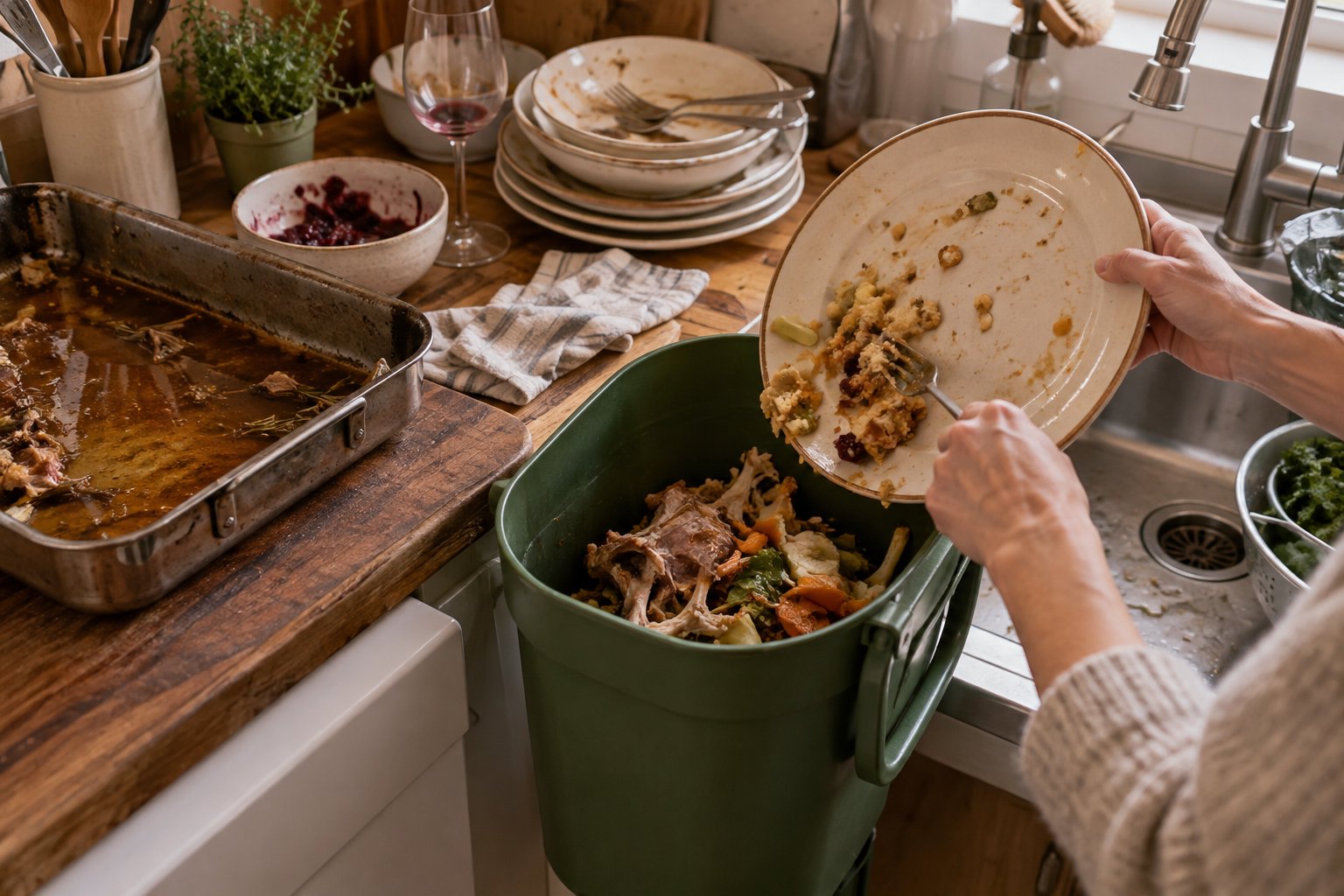
Holiday cooking is where septic systems take the most abuse. The EPA's rule for the sink is "think at the sink": put food waste in the trash, and never pour cooking grease or oil down the drain. Its list of things that do not belong in a septic system includes fats, butter, wax, cheese, heavy cream, oils and coffee grounds. Grease cools and floats to form a scum layer in the tank, and what escapes can clog the soil in the drain field.
The garbage disposal deserves special attention. Missouri's standards note that garbage grinders are not recommended because they add fats and other high organic loads, and University of Missouri Extension says a disposal increases the rate at which solids build up in the tank by 50 percent or more. The EPA recommends eliminating or limiting the use of a disposal. If you are feeding a crowd, scrape plates into the trash or compost, wipe greasy pans with a paper towel before washing, and save the disposal for the occasional small scrap.
Also skip the drain cleaner. The EPA recommends boiling water or a drain snake for a clogged drain rather than chemical openers, which can harm the organisms in the tank that break down waste.
The Bathroom: Toilets Are Not Trash Cans
Guests do not know your system, so a small sign or a lidded wastebasket in each bathroom helps. The EPA's rule of thumb is not to flush anything besides human waste and toilet paper. Its never-flush list includes baby wipes and other wet wipes, paper towels, feminine hygiene products, dental floss, diapers, cigarette butts, cat litter and medications. A wastebasket next to every toilet gives guests a place for everything else.
Skip septic tank additives as well. University of Missouri Extension advises against adding enzyme or yeast products, saying none have been proven beneficial and some can damage soil and vegetation and pollute groundwater.
Protect the Drain Field: Parking and Winter Conditions
Extra cars are another holiday side effect. The EPA advises against parking or driving on your drain field, and University of Missouri Extension lists foot and vehicle traffic over the piping as a cause of drain field problems, including freezing in winter. If guests are arriving, mark off the area so nobody parks over the lines.
Two other winter checks are worth doing. University of Missouri Extension recommends checking for ice buildup on house sewer vents, since a vent frozen closed can cause gurgling and odors. And if you own an aerobic system with a pump, float switch or alarm, the EPA notes that these systems should generally be inspected more often than a traditional one. Make sure you know where the alarm panel is and what a sounding alarm means before the house fills up.
Should You Pump the Tank Before the Holidays?
The EPA says the average household septic system should be inspected at least every three years by a professional, and household tanks are typically pumped every three to five years. University of Missouri Extension gives a broader range, saying sludge and scum must be pumped out at least every two to five years depending on tank size and household size. If you cannot remember when your tank was last serviced, late fall is a smart time to find out. Having a professional check the tank and baffles before a full house arrives is much easier than an emergency in the middle of a holiday weekend.
Pumping should be done by a licensed professional. Johnson County Community Health Services keeps a list of pumping contractors on its onsite wastewater page, which is a good place to check who is approved to work in the county.
Frequently Asked Questions
How many guests can a septic system handle?
There is no single number. It depends on the tank size, the drain field, the soil and how the water is used. A system designed for the home's bedrooms can usually handle an occasional full house if water use is spread out and leaks are fixed. If your system has had problems before, expect it to show strain first.
What are the warning signs that the system is overloaded?
Slow drains, gurgling in the plumbing, sewage odors indoors or outdoors, and wet spots or sewage surfacing in the yard are all signs worth taking seriously. University of Missouri Extension lists these among its troubleshooting indicators. Reduce water use right away and have a professional take a look.
Is it okay to use the garbage disposal on holiday leftovers?
It is best to avoid it. Scrape leftovers into the trash or compost. A disposal increases solids in the tank considerably, and holiday food is often rich in fat.
Do septic additives help during a busy week?
No. University of Missouri Extension says no enzyme or yeast additives have been proven beneficial and some can cause damage. Water use habits and regular pumping matter far more.
If you are due for an inspection, pumping, or repair, or you are wondering whether your system is the right size for how your household actually lives, contact us through our contact page. We offer septic inspections, pumping, installation and repair for homeowners across Johnson County and the surrounding area, and you can request a quote online.
